The Benevolent Dictatorship and Singular Worlds


The Pyramids are universally recognised as one of the wonders of the ancient world. It must have been incredibly difficult to be able to create such great monuments with the technology that was available at the time. In fact, it’s difficult to imagine the Pyramids being built even today. Towering stone mausoleums to ease the great leader’s passage into the afterlife would probably not be at the top of any given council’s list. Bear with me, I’m going somewhere with this.
I recently saw Dusty at the Charing Cross Theatre. As I write this, my review for The Upcoming is yet to be published. There is so little room for analysis in the 400 words I get for my review that I want to write about it more, and that’s what blogs are for, eh? I enjoyed it, but it is a deeply flawed show on more than one front. I think most of the problems can be brought around to the fact that it has had three different writers and four different directors. I will list no names here, because I don’t know who is responsible for what particulars.
I have long said that in art, you need a pyramid, with a single leader on any given project. Committees are great, but a project always has to be someone’s ‘baby’, someone’s ‘darling’. Collaborations are exciting and rewarding, but only if the vision for the art is shared and singular. This is why some of the most memorable films and shows and buildings and music are all attributed to auteurs. This term is commonly used exclusively for directors, but I would like to broaden it here to include painters and writers and architects and composers and conductors – anyone who’s style and artistry is so tangible that you can attribute the work back to them. Rothko and Pollock, Wren and Hawksmore. Quentin Tarintino and Wes Anderson. Shakespeare or Stoppard. Wagner or Sondheim. Hideo Kojima. We know that there are other people involved in bringing their art to us, but it’s them that reap the credit. You can listen to Midge Ure’s version of The Man Who Sold the World, but those lyrics are unmistakeably David Bowie’s.
The reason this is important is immersion. When you don’t need to worry about a creating a world, if that world is already there, then a lot more of your time can be freed up to make that world good.
For example: there was a lot of interesting, creative ideas in Dusty. Of course, there was the music of Dusty Springfield and the band sounded great. There were actor/musicians and use of hologram technology and even some gestures towards important feminist writing. But there was a twofold problem, that shattered my immersion constantly: there was no consistent aesthetic (or “world”, using my language from above), and so much time had been spent working and re-working the world of the show that no time seemed to have been spent on basics, like line direction.*
The first half of the show seemed to be moving in a particular direction – it needed a little editing perhaps, but there were jokes and there was, as I have said, potential for some really interesting writing about the acceptance of homosexuality in women. But the second half seemed to forget everything that had gone before. There were no more jokes and the societal reaction to lesbianism was referred to in passing, as a gesture. Worse than this, it ended so abruptly that I actually caught myself thinking “wait, is she dead now?” The world obviously needed some work, and new people had obviously been brought in along the way to do that work.
Unfortunately, these people spent so much time sorting out this mess – and not very successfully – that they didn’t seem to have time to do any directing. The actors were left floundering, and the show suffered.
How is an audience meant to immerse themselves in a story when faced with a show that feels so jumbled? What we were left with was a muddy collection of seven possible worlds that didn’t do anything. Even the choreography felt completely disparate from itself, swinging wildly between tight, interesting, plot-driven dances to what my companion disdainfully called “hair choreography”. Indeed, checking the programme, we find two choreographers listed.
At least the music was good (one orchestrator). And the lighting (one lighting designer) and the sound (one sound designer).
This isn’t just theoretical either – many times I have seen this problem fail and kill projects first hand. One occasion that stands out in my mind is a production of Tom Stoppard’s Arcadia that I performed in. The director decided, at too late a stage of the rehearsal process, to open up the direction of a scene for debate. We spent the next hour of our rehearsal time arguing over a single line. This is all very healthy in the right circumstances, of course, especially when the actor is uncomfortable, but if there is a singular vision behind a production, then it’s rarely a problem at all. The director can usually find a way around the conflict that fits the world they are trying to create, or else explain the conflict away by making their vision clearer. The problem is when different, conflicting visions muddy a world.
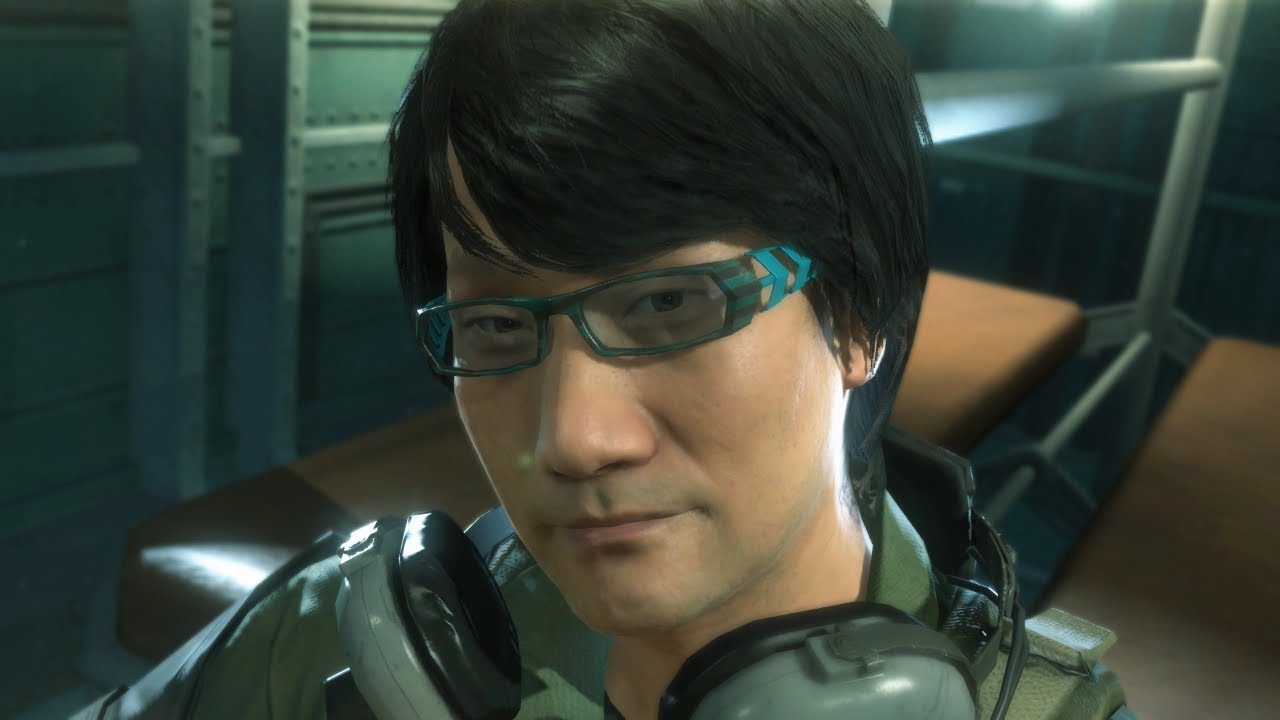
On the other side of the coin, this is also why auteurs are often centres of controversy. Video game auteur Hideo Kojima has a rather sexist approach to some of his characters. For example, questions were raised over a certain grenade-rape scene in Metal Gear Solid V: Ground Zeroes, and rightly so. It’s bizarre and uncomfortable.** But as a rule, we ignore the strange idiosyncrasies of auteurs, because the work they create – their singular visions – are otherwise so good. It’s a running joke*** that there are an inordinate amount of feet in Tarintino’s work, but nobody actually complains about it. It’s part of the world.
As I write this, Dusty has garnered some pretty unfavourable (if ill-thought-through) reviews and Metal Gear Solid V: The Phantom Pain (The latest**** offering from Kojima) has been critically acclaimed. I’m not going into the MGSV: TPP story here, because it is long and people have already explained it, but suffice it to say that it had just as rough a development process as Dusty. However, because it remained under the… supervision… of a single director, it came out excellent. I think we know who wins here.
*I’m gonna write a whole other post about line direction because it is the most common directoral mess-up I see and people don’t seem to know what I mean by it.
**Of course, it was meant to be uncomfortable, but this is a debate I don’t want to spend time on here and it’s moot to the point I’m making.
***No pun intended.
****It’s supposed to be the last, but I’m not sure I entirely believe that with these sales.
 Leo West